
Causes of Lower Back Pain in Office Workers
In today’s modern work culture, many professionals spend long hours sitting at desks, which often leads to discomfort and chronic pain. One of the most common complaints is Causes of Lower Back Pain in Office Workers, which has become a growing concern among employees in India and across the world. Understanding the reasons behind this condition is the first step toward prevention and effective treatment.
Why Lower Back Pain Is Common in Office Workers
Office workers typically maintain a sedentary lifestyle. Sitting for extended periods, poor posture, and lack of movement put constant stress on the spine. Over time, this leads to muscle stiffness, reduced flexibility, and spinal issues.
Some common workplace habits that contribute include:
- Sitting without lumbar support
- Slouching or leaning forward
- Improper desk and chair height
- Lack of regular breaks
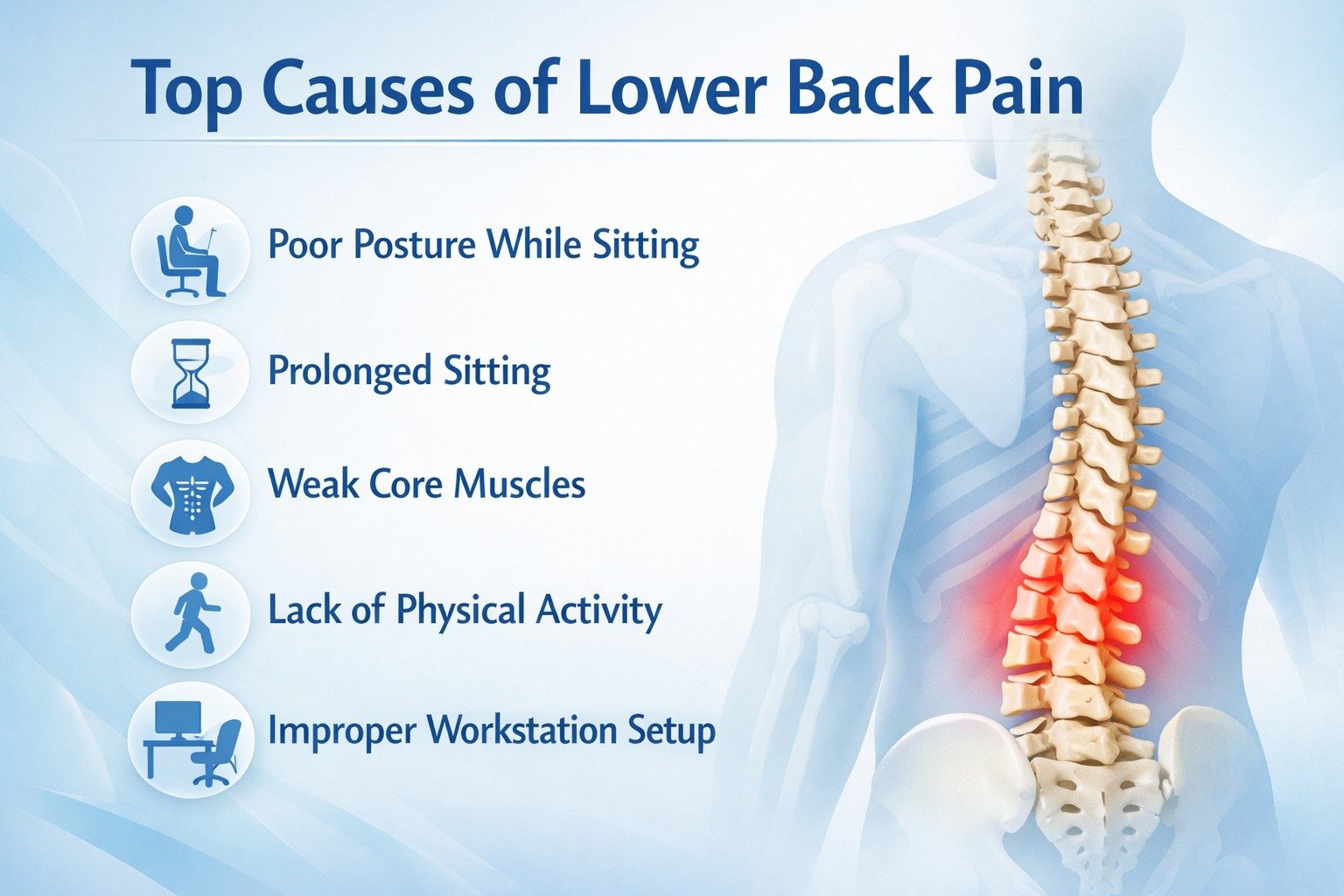
Top Causes of Lower Back Pain
1. Poor Posture While Sitting
One of the biggest reasons for back pain is poor posture. When you sit with a curved spine or hunched shoulders, it increases pressure on the lower back muscles.
2. Prolonged Sitting
Sitting for more than 6–8 hours daily reduces blood circulation and weakens core muscles, which support your spine.
3. Weak Core Muscles
Your abdominal and back muscles work together to stabilize your spine. Weak muscles increase strain on your lower back.
4. Lack of Physical Activity
A sedentary lifestyle leads to stiffness and reduced mobility, making your lower back more prone to injury.
5. Improper Workstation Setup
Incorrect chair height, screen level, or keyboard placement can lead to awkward body positions and long-term back issues.
Gender-Specific Causes
Many people also search for what causes lower back pain in females Hormonal changes, pregnancy, and conditions like endometriosis can contribute to lower back discomfort in women. Additionally, poor posture and sedentary work habits further worsen the condition.
Lifestyle-Related Triggers
1. Exercise-Related Pain
Sometimes, people experience lower back pain after exercise due to improper form, overtraining, or lack of warm-up.
2. Sleep Issues
Your sleeping posture plays a critical role in spinal health. Choosing the right sleeping positions for lower back pain such as sleeping on your back with a pillow under your knees—can significantly reduce discomfort.
3. Use of Support Belts
Some individuals consider using a lower back pain belt for male for additional support. While it may provide temporary relief, it should not replace proper posture and exercise.
Medical Conditions Linked to Lower Back Pain
1. Kidney-Related Pain
Pain on one side of the lower back may raise concerns about lower back pain right side kidney issues. Kidney infections or stones can cause sharp, localized pain and require medical attention.
2. Referred Pain
Sometimes, people confuse unrelated conditions like pain in lower back of head with spinal issues, but this is usually linked to tension headaches or cervical spine problems.
When Should You See a Doctor?
If your pain persists for more than a few weeks or worsens over time, it is important to consult a specialist. Many patients search for a lower back pain doctor near me when symptoms become severe.
At drkarthiksboneandjointclinic, Dr. Karthik Subramanian specializes in diagnosing and treating spine and joint-related issues with advanced techniques.
For patients experiencing joint degeneration along with back pain, you can explore advanced solutions like knee replacement here: best knee replacement surgeon Mulund
You can also check the clinic location and reviews:
Best Robotic Knee Replacement Surgeon Mulund
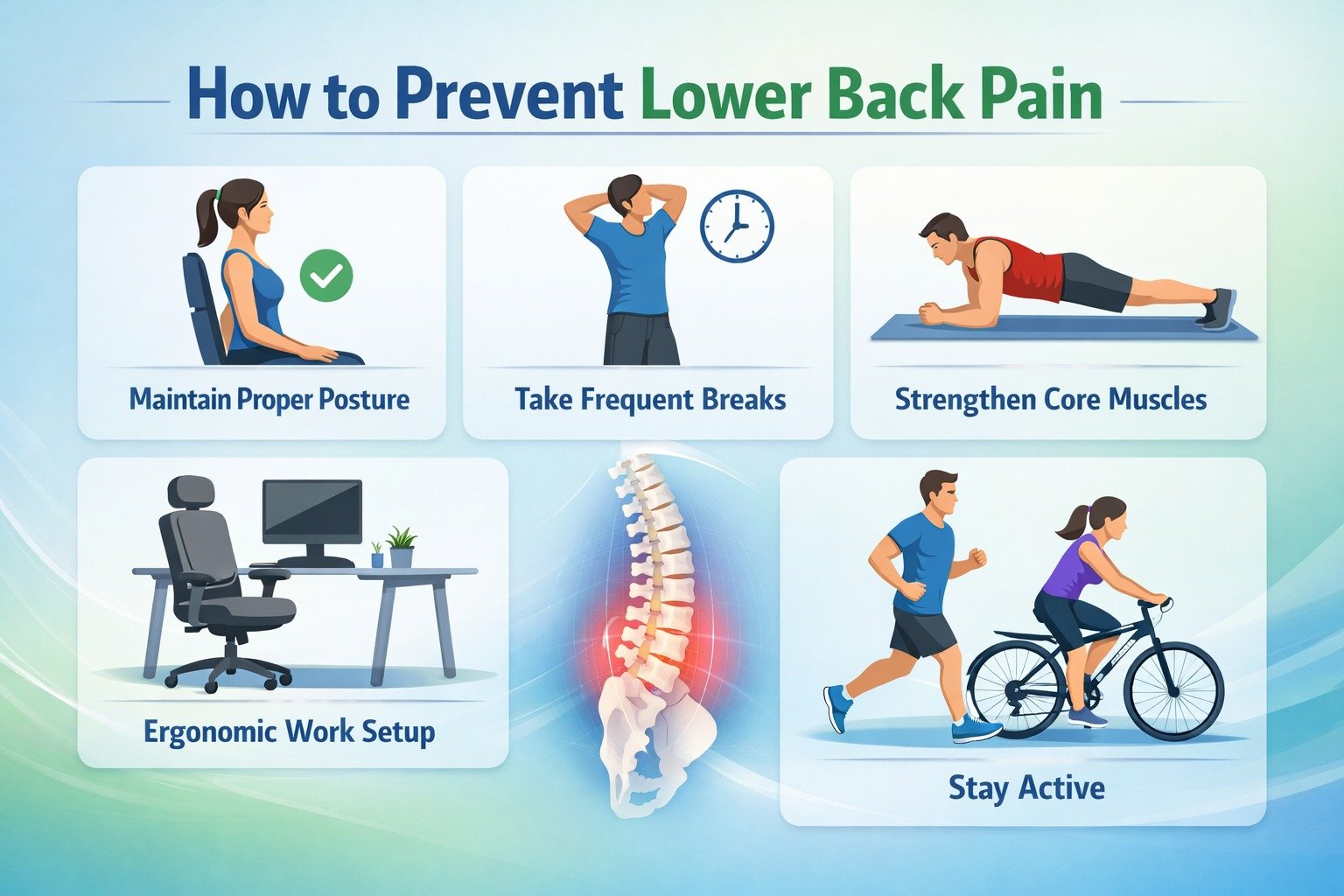
How to Prevent Lower Back Pain
1. Maintain Proper Posture
- Sit upright with your back supported
- Keep your feet flat on the floor
- Avoid slouching
2. Take Frequent Breaks
Stand up, stretch, or walk every 30–45 minutes to reduce stiffness.
3. Strengthen Core Muscles
Regular exercises like planks, yoga, and pilates can improve spinal support.
4. Ergonomic Work Setup
- Adjust your chair height
- Keep your screen at eye level
- Use lumbar support
5. Stay Active
Engage in regular physical activity to keep your muscles flexible and strong.
Treatment Options
1. Physiotherapy
Helps improve mobility and strengthen muscles.
2. Medications
Pain relievers and anti-inflammatory drugs may be prescribed.
3. Lifestyle Modifications
Correct posture, weight management, and regular exercise play a crucial role.
4. Advanced Treatments
In severe cases, surgical interventions may be recommended by specialists like Dr. Karthik Subramanian.
Conclusion
Lower back pain is a common issue among office workers, but it is largely preventable with the right habits and awareness. By understanding the Causes of Lower Back Pain in Office Workers, improving posture, and staying active, you can significantly reduce your risk.
If you are already experiencing discomfort, early diagnosis and expert care from specialists like Dr. Karthik Subramanian at drkarthiksboneandjointclinic can help you recover faster and live pain-free.
The most common causes include prolonged sitting, poor posture, lack of physical activity, weak core muscles, and an improper workstation setup.
You should consult a doctor if:
- Pain lasts more than 2–3 weeks
- Pain radiates to your legs
- You experience numbness or weakness
Pain worsens over time
Yes, sitting for long hours puts pressure on the spine and weakens muscles, leading to stiffness and chronic lower back pain.
Sit with your back straight, shoulders relaxed, feet flat on the floor, and your screen at eye level. Use a chair with proper lumbar support.
Sleeping on your back with a pillow under your knees or on your side with a pillow between your legs helps maintain spinal alignment.
Yes, regular exercise strengthens core muscles and improves flexibility. However, improper form can worsen pain, so guided exercise is important.
Yes, women may experience lower back pain due to hormonal changes, pregnancy, or conditions like PCOS or endometriosis.
Yes, kidney infections or stones can cause sharp pain on one side of the lower back and require medical evaluation.
Back support belts can provide temporary relief, but they should not replace proper posture, exercise, and medical treatment.
If home remedies don’t work, or your pain interferes with daily activities, it’s best to consult a specialist like Dr. Karthik Subramanian at drkarthiksboneandjointclinic.