- dr.karthik1@gmail.com
- 9082600481/ 8828409944 / 22352 05700
- Mulund West
- Mon - Fri: 10:00AM - 10:00PM
Knee pain can slowly reduce your ability to walk, sit, climb stairs, or enjoy daily life. Many patients delay surgery because they fear pain, long hospital stay, or slow recovery. Modern orthopaedic surgery has changed this with advanced techniques that focus on faster healing. One such technique is Muscle-Sparing Knee Replacement: Procedure and Benefits, which replaces the damaged knee joint while protecting important muscles. At drkarthiksboneandjointclinic, under the care of Dr. Karthik Subramanian, patients receive advanced knee replacement treatment designed for quicker recovery and better long-term movement.
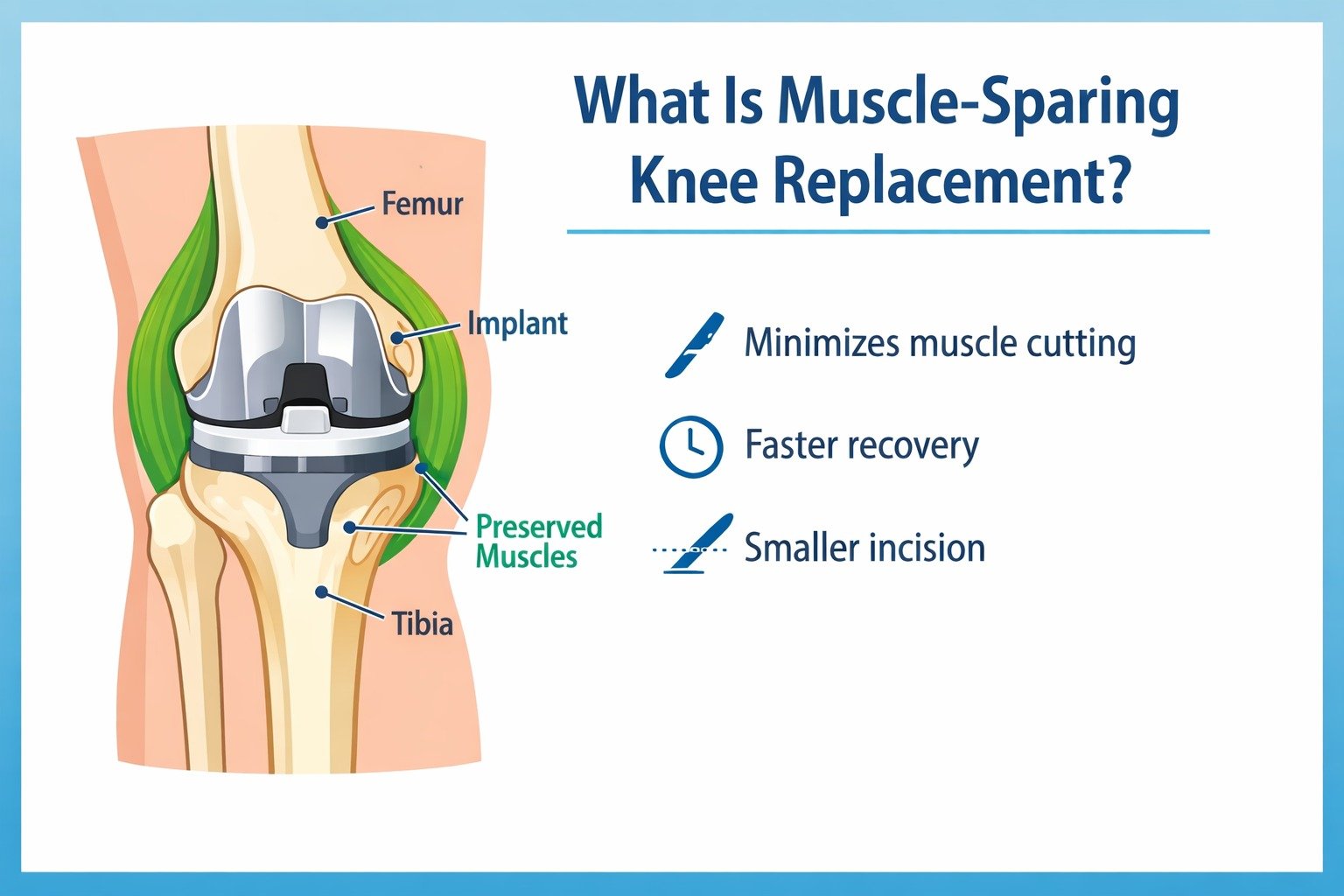
Muscle-sparing knee replacement is a modern surgical method where the knee joint is replaced without cutting major muscles or tendons. Instead of cutting through muscles, the surgeon carefully moves them aside to access the knee joint. This approach reduces trauma to the body and helps patients recover faster.
Patients often consult an experienced Orthopedic Doctor in mulund to understand whether this technique is suitable for their knee condition and overall health.
In traditional knee replacement surgery, muscles are cut to reach the knee joint. This can lead to more pain and longer recovery. Muscle-sparing surgery avoids muscle damage, which means:
This makes it especially helpful for elderly patients and those worried about post-surgery mobility.
The procedure is carefully planned and performed step by step:
Because muscles remain intact, the body responds better to surgery and healing begins earlier.
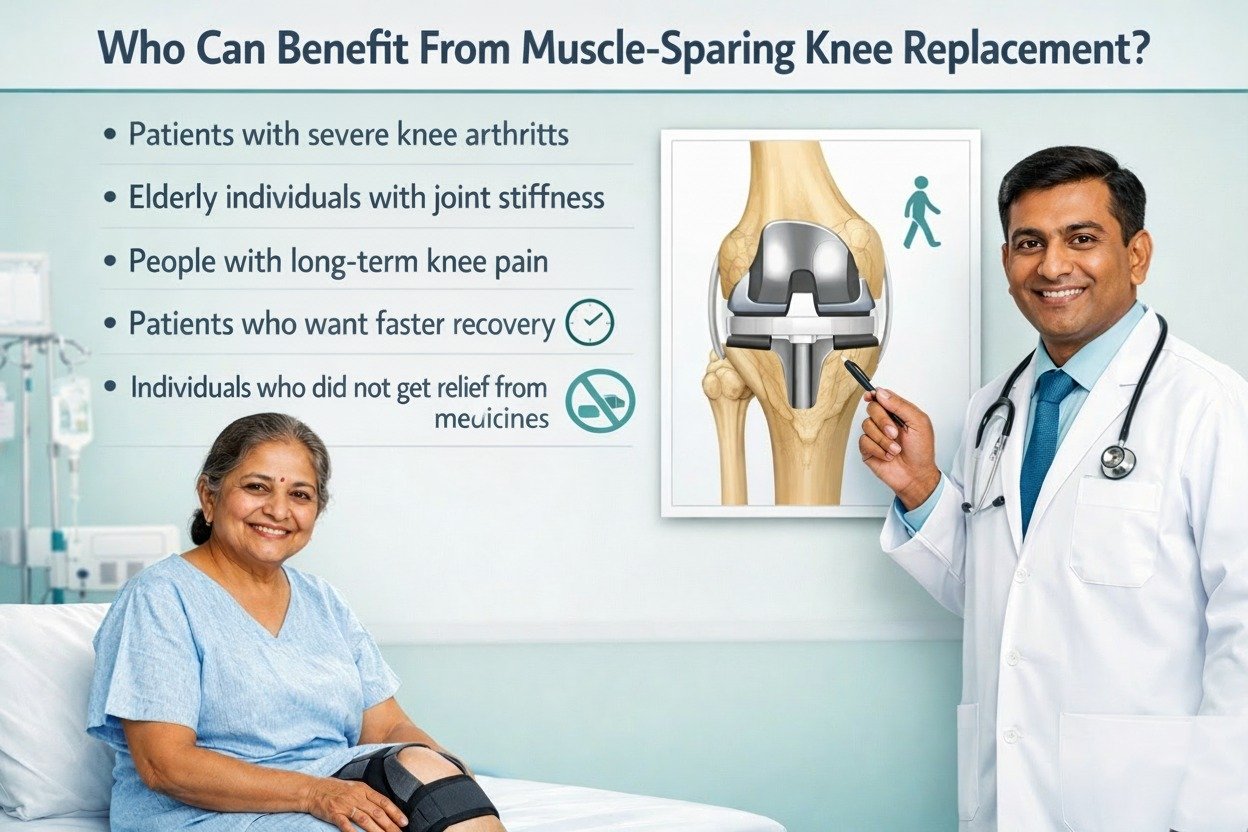
This surgery is suitable for:
Your doctor will decide the best option after a detailed knee examination and scans.
There are different types of knee replacement available today. These include total knee replacement, partial knee replacement, and muscle-sparing knee replacement. The choice depends on how much the knee joint is damaged and the patient’s age, weight, and activity level.
One of the biggest advantages of this technique is faster recovery. For older patients, knee replacement recovery time for elderly is often shorter with muscle-sparing surgery because muscles stay strong.
Most patients:
This allows patients to return to daily activities with confidence.
Proper movement is essential after surgery. Doctors recommend gentle exercises after knee replacement to improve flexibility and strength. These exercises help:
Physiotherapy plays a key role in long-term success.
Many patients slow their recovery due to lack of awareness. Some top 5 mistakes after knee replacement include:
Avoiding these mistakes helps protect the new knee joint.
With modern technology and experienced surgeons, the knee replacement surgery success rate is very high. Most patients experience long-term pain relief, better movement, and improved quality of life.
Success depends on:
The knee replacement surgery cost depends on factors such as:
While muscle-sparing surgery may cost slightly more, the benefits of faster recovery and fewer complications often make it cost-effective in the long run.
At drkarthiksboneandjointclinic, patients receive personalised care with a focus on safety and long-term results. Dr. Karthik Subramanian uses advanced surgical methods and guides patients through every stage of recovery
Many patients prefer treatment close to home for easy follow-ups. You can find clinic location and patient reviews here: Bone specialist doctor in mulund
This helps patients plan visits comfortably and confidently.
Muscle-sparing knee replacement is a patient-friendly and advanced solution for chronic knee pain. By protecting muscles, it reduces pain, speeds up recovery, and improves long-term knee function. With expert care, regular physiotherapy, and correct guidance, patients can return to an active and independent life.
If knee pain is affecting your daily routine, consult Dr. Karthik Subramanian at drkarthiksboneandjointclinic for expert advice and advanced knee replacement treatment.
Muscle-sparing knee replacement is a modern surgery where the knee joint is replaced without cutting major muscles, helping in faster recovery and less pain.
People with severe knee arthritis, elderly patients, and those who want quicker recovery are good candidates for muscle-sparing knee replacement.
This surgery is better because it causes less muscle damage, less pain, faster healing, and earlier walking after surgery.
The best type depends on your knee damage, age, and activity level. Your doctor will decide after examining your knee and reports.
You should always follow the advice of your orthopaedic surgeon and physiotherapist for safe recovery and long-term knee health.
Most patients start walking in 1–2 days and recover well within 6–8 weeks with regular exercises.
Many patients walk with support within a few days and walk independently within a few weeks, depending on their recovery.
Physiotherapy can be done at the hospital, a nearby physiotherapy centre, or at home as advised by your doctor.
Simple exercises like knee bending, leg raises, walking, and stretching are important to improve strength and flexibility.
Skipping exercises can cause stiffness, slow recovery, and weak knee muscles, affecting long-term results.
The surgery is very safe when done by an experienced orthopaedic surgeon using modern techniques and proper care.
You should contact your doctor if you have severe pain, swelling, fever, redness, or difficulty moving the knee.
With proper care and regular follow-ups, a knee replacement implant can last 15–20 years or even longer.
